Attachment styles in love play a crucial role in shaping our romantic experiences, influencing how we connect and communicate with partners. By understanding these styles, we can gain insights into our behaviors and emotional responses in relationships, paving the way for healthier connections.
This exploration covers the four primary attachment styles—secure, anxious, avoidant, and disorganized—tracing their origins in childhood and their lasting impact on adult relationships. It reveals how these attachment patterns can determine not only the quality of our interactions but also our overall satisfaction and emotional well-being within romantic contexts.
Attachment Styles Overview
Understanding attachment styles is crucial in comprehending how we connect with others, particularly in romantic relationships. Attachment theory, developed by John Bowlby and Mary Ainsworth, Artikels how early bonds with caregivers shape our emotional patterns and responses in adult relationships. By identifying different styles—secure, anxious, avoidant, and disorganized—we can better navigate interpersonal dynamics and improve our relational health.Attachment styles originate from the interactions and emotional responses we experience during childhood.
These styles are formed based on the consistency and quality of care provided by primary caregivers. When a child’s emotional needs are met reliably and sensitively, they develop a secure attachment style. Conversely, inconsistent or neglectful caregiving can lead to anxious, avoidant, or disorganized attachment styles. Each of these styles carries unique characteristics that manifest in adult relationships, influencing how individuals interact with partners, handle conflict, and express intimacy.
Attachment Styles Definitions
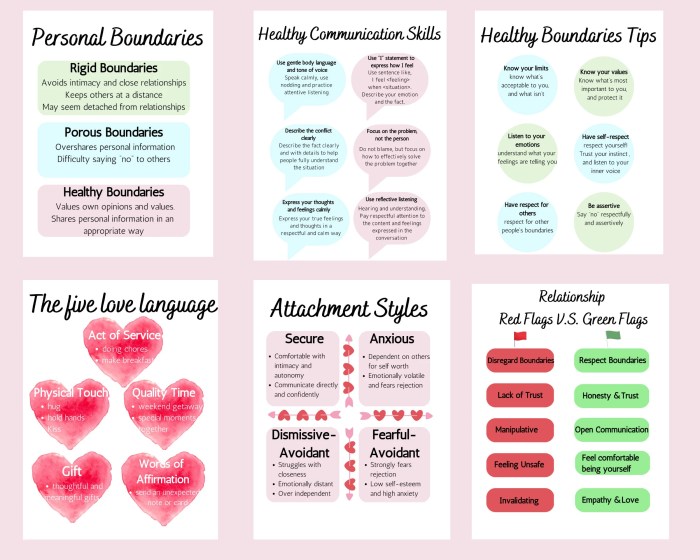
The four attachment styles play a fundamental role in shaping adult romantic relationships. Each style influences behavior, communication, and emotional health in distinct ways. Below are the definitions and characteristics of each attachment style:
- Secure Attachment: Individuals with secure attachment styles are comfortable with intimacy and independence. They are generally warm and loving and can effectively communicate their needs and feelings.
- Anxious Attachment: Those exhibiting anxious attachment often seek high levels of intimacy and approval. They may appear clingy or overly dependent and can experience significant anxiety about their relationships.
- Avoidant Attachment: Avoidantly attached individuals tend to value independence and often feel uncomfortable with closeness. They may suppress their emotions and avoid vulnerability, leading to emotional distance in relationships.
- Disorganized Attachment: This style is characterized by a lack of clear attachment behavior, often stemming from trauma or inconsistent caregiving. Individuals may display a mix of anxious and avoidant behaviors, leading to confusion and chaos in relationships.
Origins of Attachment Styles in Childhood
The development of attachment styles begins in early childhood, primarily through interactions with caregivers. These early experiences are pivotal, as they establish the foundational patterns for future relationships. Secure attachments are cultivated when caregivers respond promptly and appropriately to a child’s needs, fostering a sense of safety and reliability. In contrast, anxious attachment may develop when caregivers are inconsistently available, leaving the child uncertain and overly preoccupied with securing attention and affection.Avoidant attachment arises when caregivers are emotionally unavailable or dismissive, leading children to develop self-reliance and suppress their emotional needs.
Disorganized attachment often stems from chaotic or abusive environments, creating confusion in how to relate to others. These childhood experiences create a blueprint for adult relationships, where patterns of attachment can repeat, making awareness and understanding vital for personal growth and relationship satisfaction.
Influence of Attachment Styles on Adult Romantic Relationships
Attachment styles have a profound impact on how individuals approach romantic relationships. Understanding these influences can empower people to make more informed choices about their partners and interactions. Characteristics of each attachment style manifest in various ways in adult relationships, often dictating how conflicts are handled, intimacy is expressed, and emotional needs are met.Individuals with secure attachment tend to have healthier relationships, characterized by open communication and mutual satisfaction.
They are comfortable with expressing their emotions and navigating conflicts constructively. In contrast, those with anxious attachment may experience heightened relationship anxiety, often leading to jealousy or fear of abandonment. Avoidantly attached individuals may struggle to connect emotionally, leading to partners feeling neglected or unappreciated. Disorganized attachment often results in tumultuous relationships marked by unpredictability and intense emotional swings.
Understanding your attachment style can provide insight into your relational patterns, enabling personal growth and healthier connections.
Attachment Styles and Relationships
In romantic relationships, attachment styles play a crucial role in shaping how partners communicate, resolve conflicts, and connect with one another. Understanding these styles can help individuals foster healthier interactions and navigate the complexities of love more effectively. By recognizing the nuances of attachment styles, couples can work towards building stronger emotional bonds and improving their overall relationship dynamics.Different attachment styles significantly affect communication in romantic relationships.
Securely attached individuals tend to communicate openly and effectively, often expressing their emotions and needs without hesitation. In contrast, those with anxious attachment styles might seek constant reassurance, which can lead to misunderstandings and heightened emotional responses. On the other hand, avoidant individuals may struggle with intimacy and often withdraw during conflicts, preferring to maintain distance rather than engage in difficult conversations.
These varying approaches can create challenges in relationships, especially when partners have differing attachment styles.
Impact of Attachment Styles on Conflict Navigation
Navigating conflicts can be particularly challenging when partners possess different attachment styles. Understanding how each style responds to conflict is essential for fostering productive discussions and resolutions. Below are illustrative examples of how partners can handle conflicts based on their attachment styles:
- Secure and Anxious Attachment: A securely attached partner can offer reassurance and support to the anxious partner during conflicts. For example, when the anxious partner expresses fears about abandonment, the secure partner might calmly validate those feelings while reassuring them of their commitment.
- Secure and Avoidant Attachment: The secure partner can encourage the avoidant individual to express their feelings. For example, during an argument, the secure partner might say, “I understand this is tough for you. Can we talk about how you’re feeling?” This approach can help the avoidant partner feel safe enough to engage in the discussion.
- Anxious and Avoidant Attachment: This pairing can lead to an escalation of conflict, as the anxious partner’s need for intimacy may trigger the avoidant partner’s fear of closeness. To navigate this, both partners need to acknowledge their differences. The anxious partner might benefit from practicing self-soothing techniques, while the avoidant partner can work on gradually opening up.
Recognizing individual attachment styles can significantly enhance relationship dynamics. Individuals can adopt various strategies to improve their interactions based on their attachment styles:
- For Secure Individuals: Continue fostering open communication and emotional availability. Engage in regular check-ins with your partner to discuss feelings and needs.
- For Anxious Individuals: Focus on developing self-confidence and practicing self-soothing techniques. Establish a routine of self-reflection to identify triggers and communicate needs directly to partners.
- For Avoidant Individuals: Work on increasing emotional awareness and expressing feelings. Make a conscious effort to engage in discussions, especially during conflicts, and practice relationships skills in low-stress situations.
“Understanding your attachment style is the first step toward building healthier and more fulfilling relationships.”
By implementing these strategies, individuals can facilitate better communication and emotional understanding in their relationships, leading to healthier dynamics and deeper connections.
Broader Implications of Attachment Styles
Attachment styles significantly influence various aspects of an individual’s life, particularly concerning mental health, cultural perceptions, and relationship dynamics. Understanding these broader implications can provide valuable insights into how attachment styles shape our experiences in love and relationships.
Attachment Styles and Mental Health Outcomes
The interplay between attachment styles and mental health is profound. Research indicates that individuals with insecure attachment styles—such as anxious or avoidant—tend to experience higher levels of anxiety, depression, and overall psychological distress. This correlation arises because insecure attachments often lead to maladaptive coping strategies and difficulty in building supportive social networks. For instance, an anxious attachment style may cause individuals to constantly seek reassurance from partners, leading to emotional fatigue and chronic stress.
Conversely, those with an avoidant style may struggle with intimacy, which can foster feelings of loneliness and isolation. Studies consistently show that secure attachment is associated with better mental health outcomes, promoting resilience and emotional well-being.
“Attachment styles serve as a blueprint for how we relate to ourselves and others, influencing our mental health in significant ways.”
Cultural Perceptions of Love and Attachment Styles
Cultural context plays a crucial role in shaping attachment styles, as different societies hold diverse beliefs about love and relationships. In collectivist cultures, where community and family ties are emphasized, attachment styles may manifest differently than in individualistic cultures that prioritize personal fulfillment and independence. For example, in many Asian cultures, where familial obligations are paramount, individuals may adopt a more interdependent attachment style.
This can lead to a strong focus on relational harmony, sometimes at the expense of personal needs. Conversely, in Western societies, the emphasis on self-expression can encourage more avoidant or anxious behaviors, as individuals grapple with balancing personal desires and relationship expectations.Understanding these cultural nuances is essential for fostering healthy relationships across different societies, as it allows for greater empathy and adaptability in romantic dynamics.
Impact of Attachment Styles on Long-Term Relationship Satisfaction and Stability
Attachment styles have a lasting impact on relationship satisfaction and stability. Securely attached individuals typically report higher levels of satisfaction and better communication skills, which contribute to healthier relationship dynamics. They are more likely to engage in effective conflict resolution and provide emotional support to their partners.In contrast, those with insecure attachment styles often face challenges that can undermine relationship stability.
Anxious individuals may exhibit clinginess and fear of abandonment, while avoidant individuals may distance themselves during conflicts, leading to unresolved issues and emotional disconnect.Numerous longitudinal studies highlight that relationships characterized by secure attachment are more likely to endure over time. For instance, a study published in the Journal of Marriage and Family found that couples with secure attachments reported greater relationship satisfaction and longevity compared to those with insecure attachments.
“Attachment styles not only shape our interactions but also determine the long-term viability of our romantic partnerships.”
In summary, recognizing the broader implications of attachment styles can enhance our understanding of mental health outcomes, cultural influences, and relationship dynamics, ultimately guiding individuals toward healthier connections and emotional well-being.
Outcome Summary
In conclusion, recognizing and understanding our attachment styles in love can lead to profound changes in our relationships. By fostering awareness and employing strategies to address differing styles, we can navigate conflicts more effectively and enhance our relational dynamics for greater satisfaction and stability. Ultimately, this journey into attachment theory not only enriches our personal connections but also contributes to our mental health and emotional resilience.
Essential Questionnaire
What are the key characteristics of each attachment style?
Secure individuals are comfortable with intimacy and trust; anxious individuals crave closeness but fear abandonment; avoidant individuals value independence and often distance themselves; disorganized individuals may have inconsistent behaviors and fears stemming from past trauma.
Can attachment styles change over time?
Yes, attachment styles can evolve through life experiences and conscious efforts to develop healthier patterns, especially with support and therapy.
How can I determine my attachment style?
Reflecting on past relationships, assessing your comfort with intimacy and dependency, and taking reputable attachment style quizzes can help identify your style.
Do attachment styles affect friendships too?
Absolutely, attachment styles influence not only romantic relationships but also friendships, family ties, and professional interactions.
Can couples with different attachment styles work out?
Yes, with understanding, open communication, and a willingness to adapt, couples can navigate their differences and build a healthy relationship.